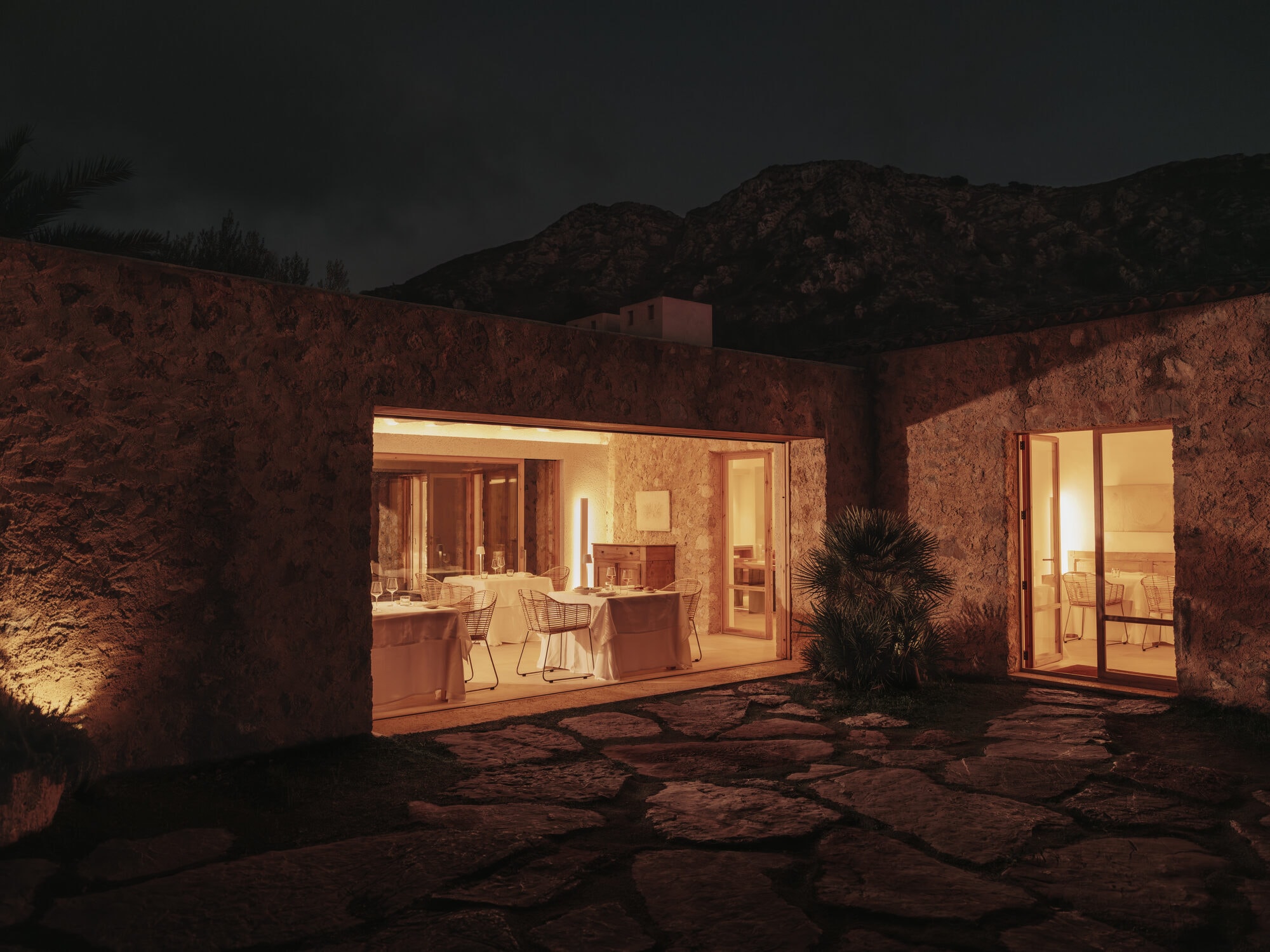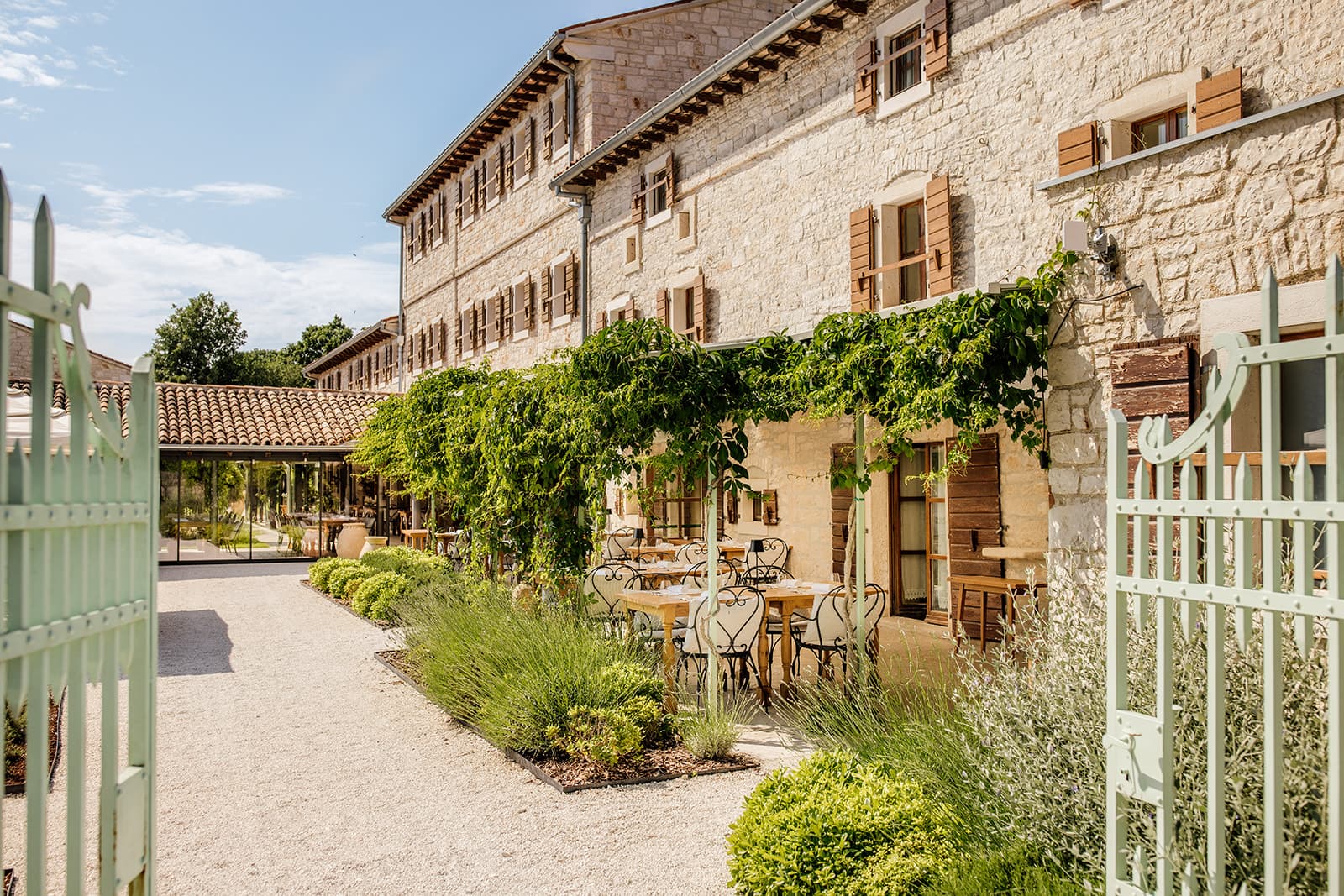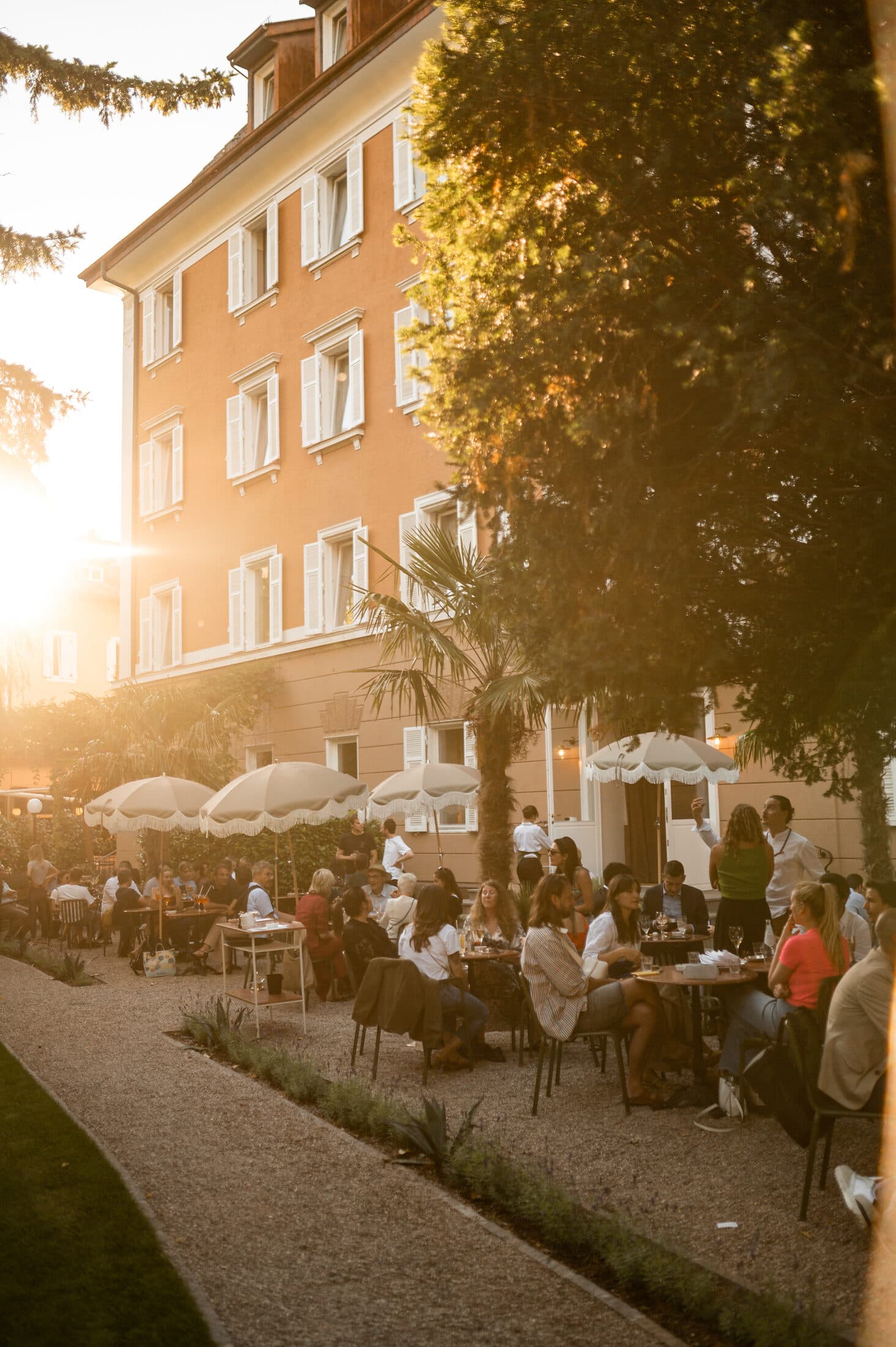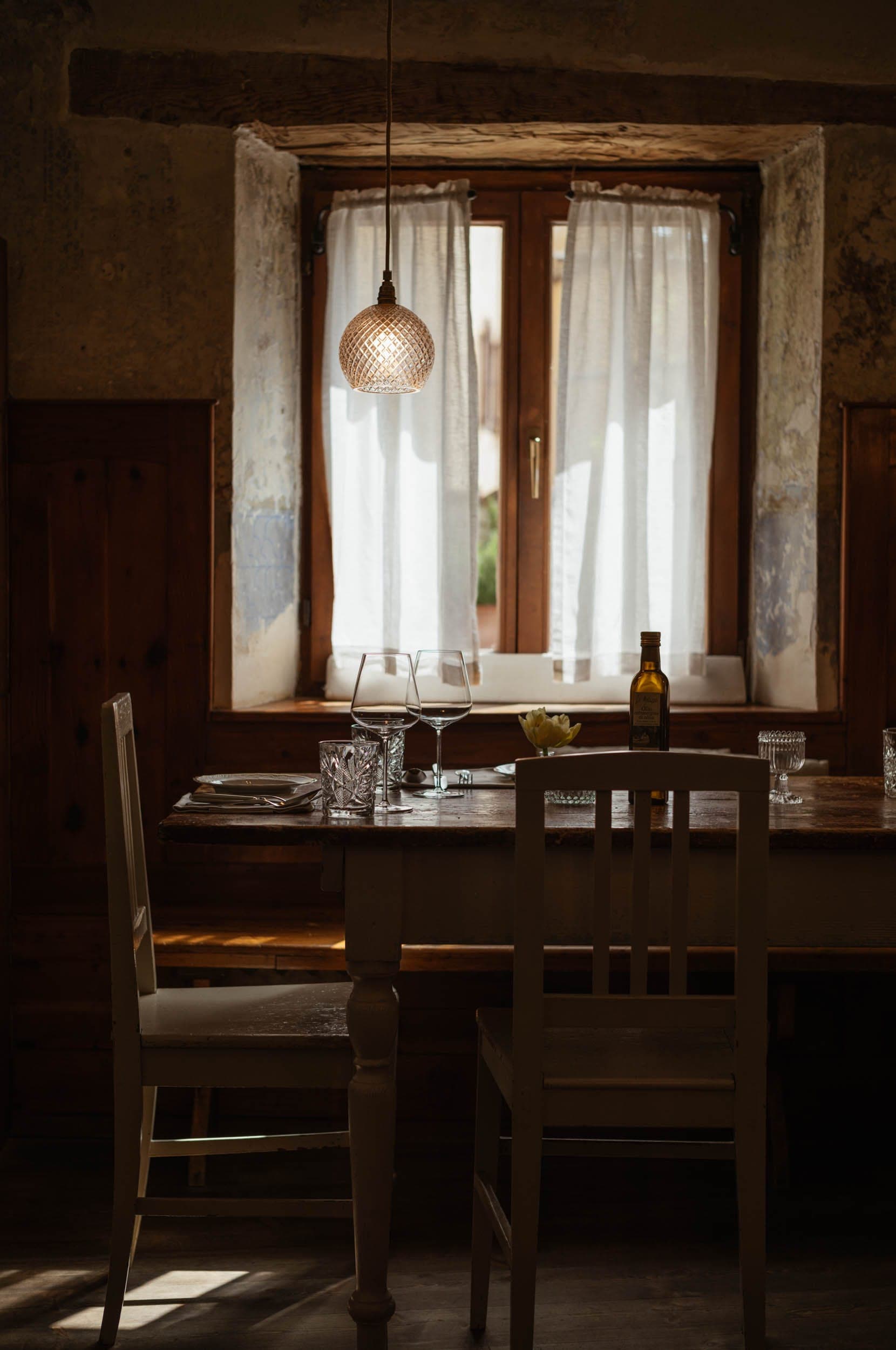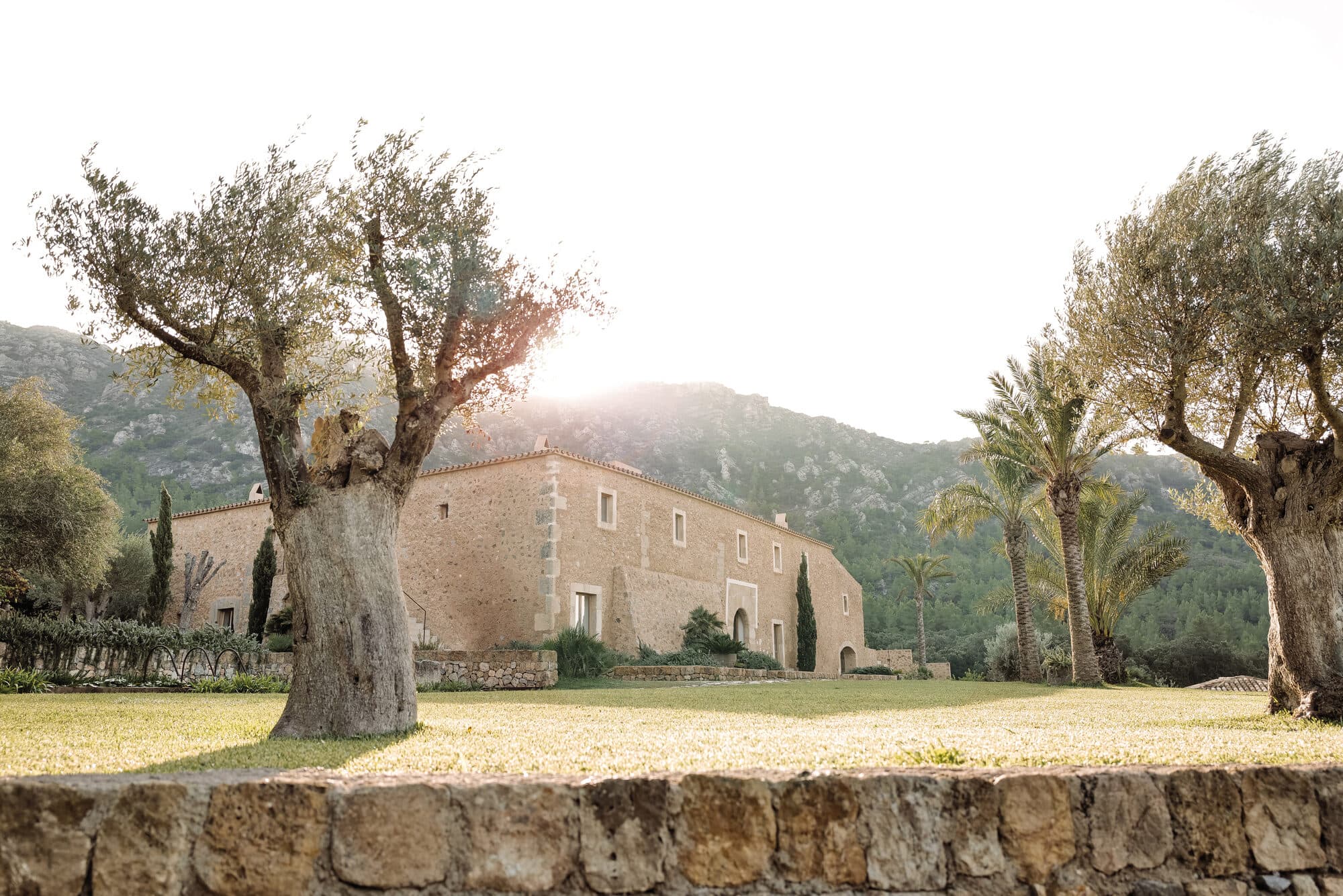
There is a moment, usually on the first evening, when guests at Es Racó d'Artà reach for their phones — and put them away again. Not because anyone asks them to. But because the hill above Artà turns a shade of amber at this hour that no filter improves. Somewhere below, a donkey wanders to the edge of a meadow. Otherwise: nothing. That nothing is the point.
Arrive to forget
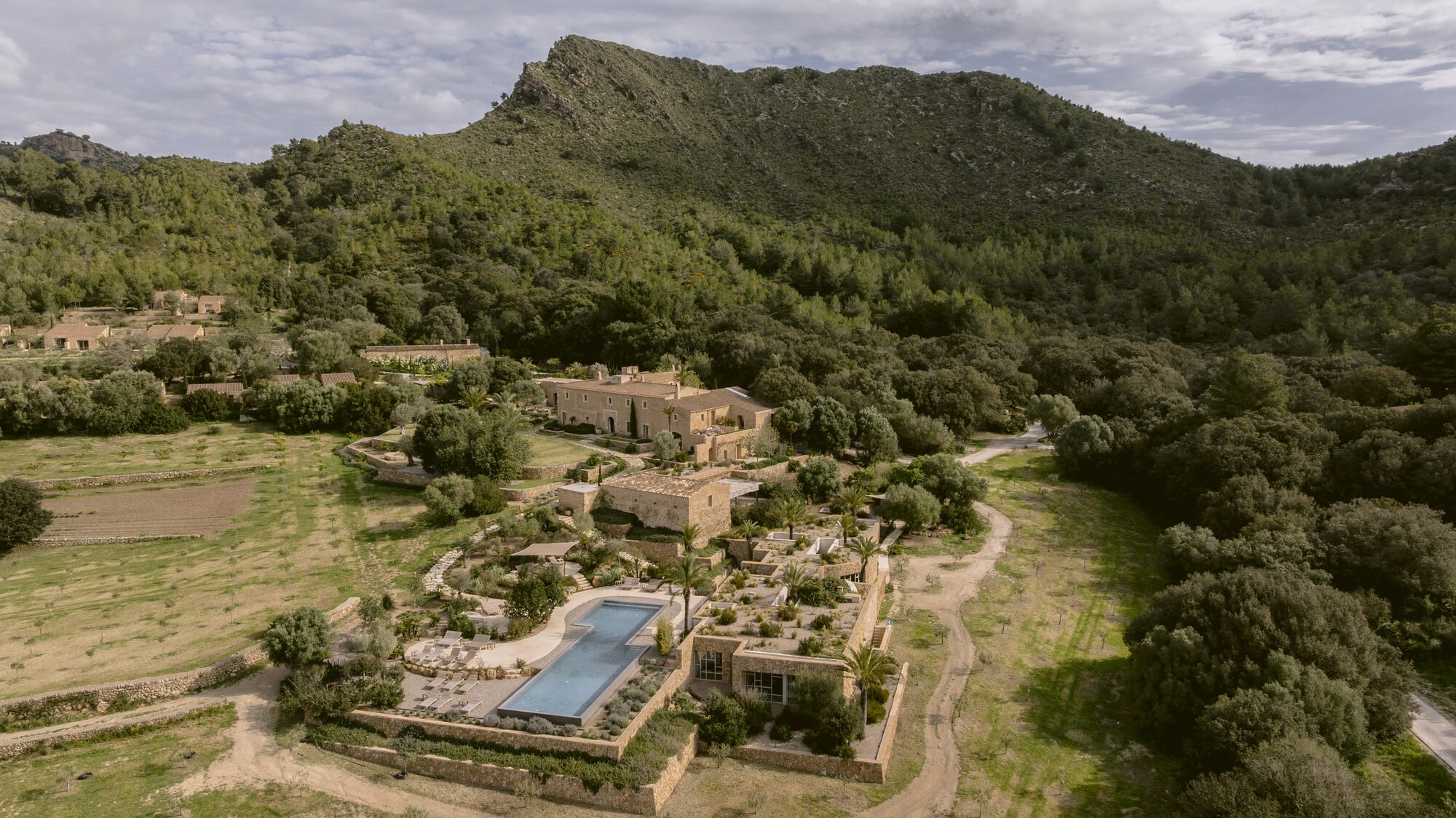
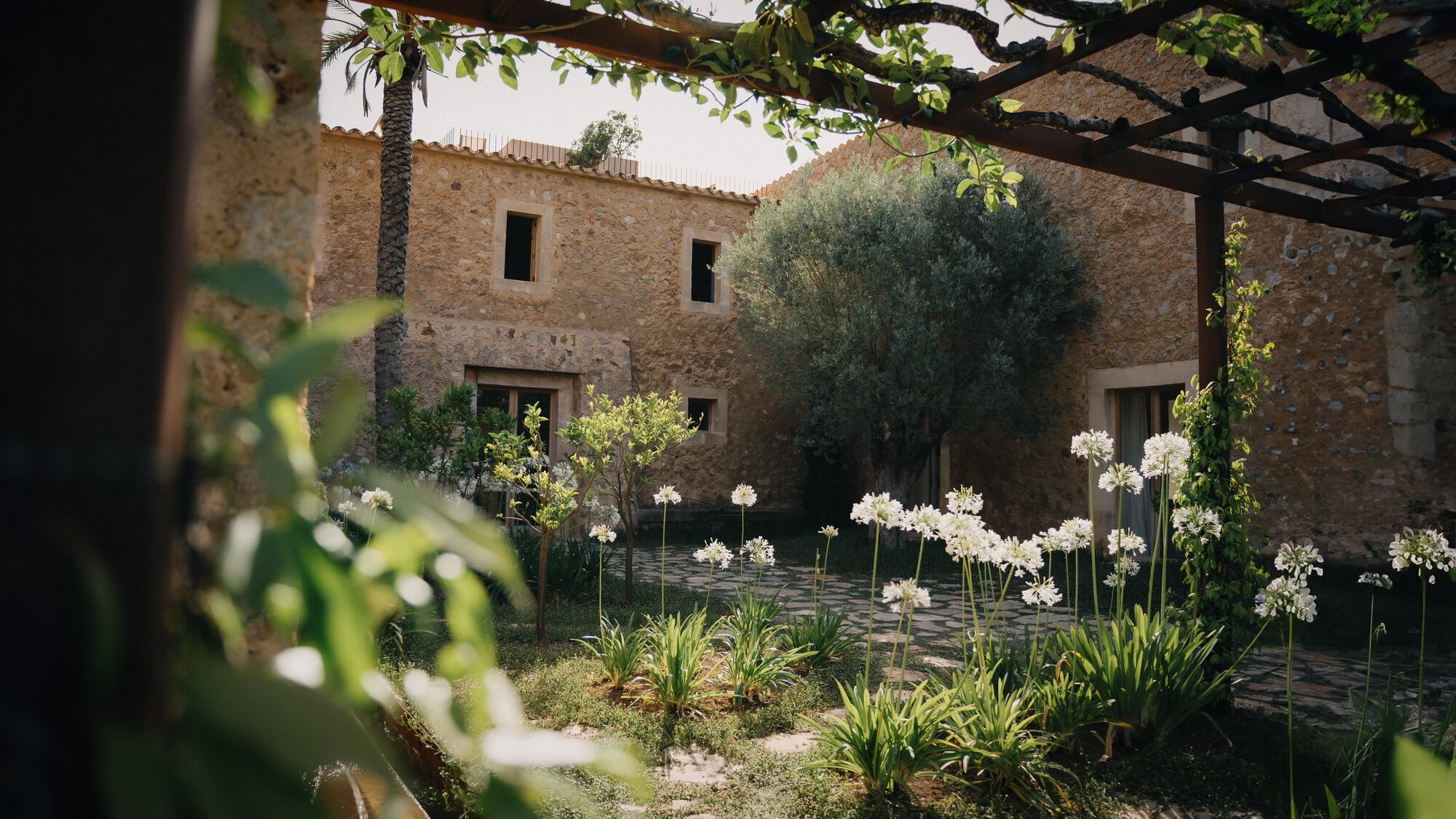
Es Racó d'Artà sits in a quiet valley on the edge of the Llevant Natural Park, in Mallorca's rural northeast — a stone's throw from the honey-coloured town of Artà, twenty-five kilometres of blissfully undeveloped coastline within reach, Menorca a smudge on the horizon on clear days. Dry-stone walls stitch the fields together the way they have for centuries.
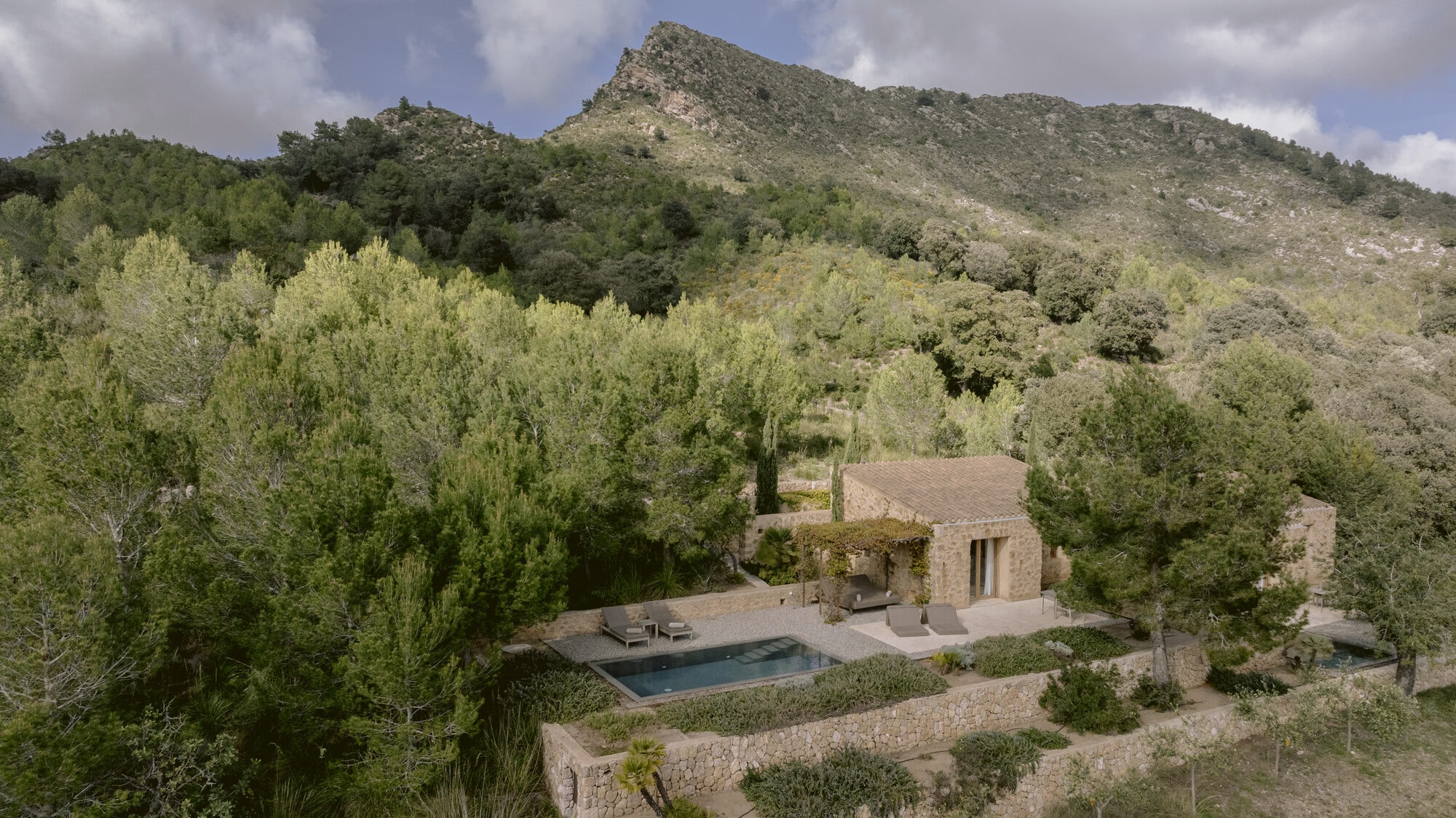
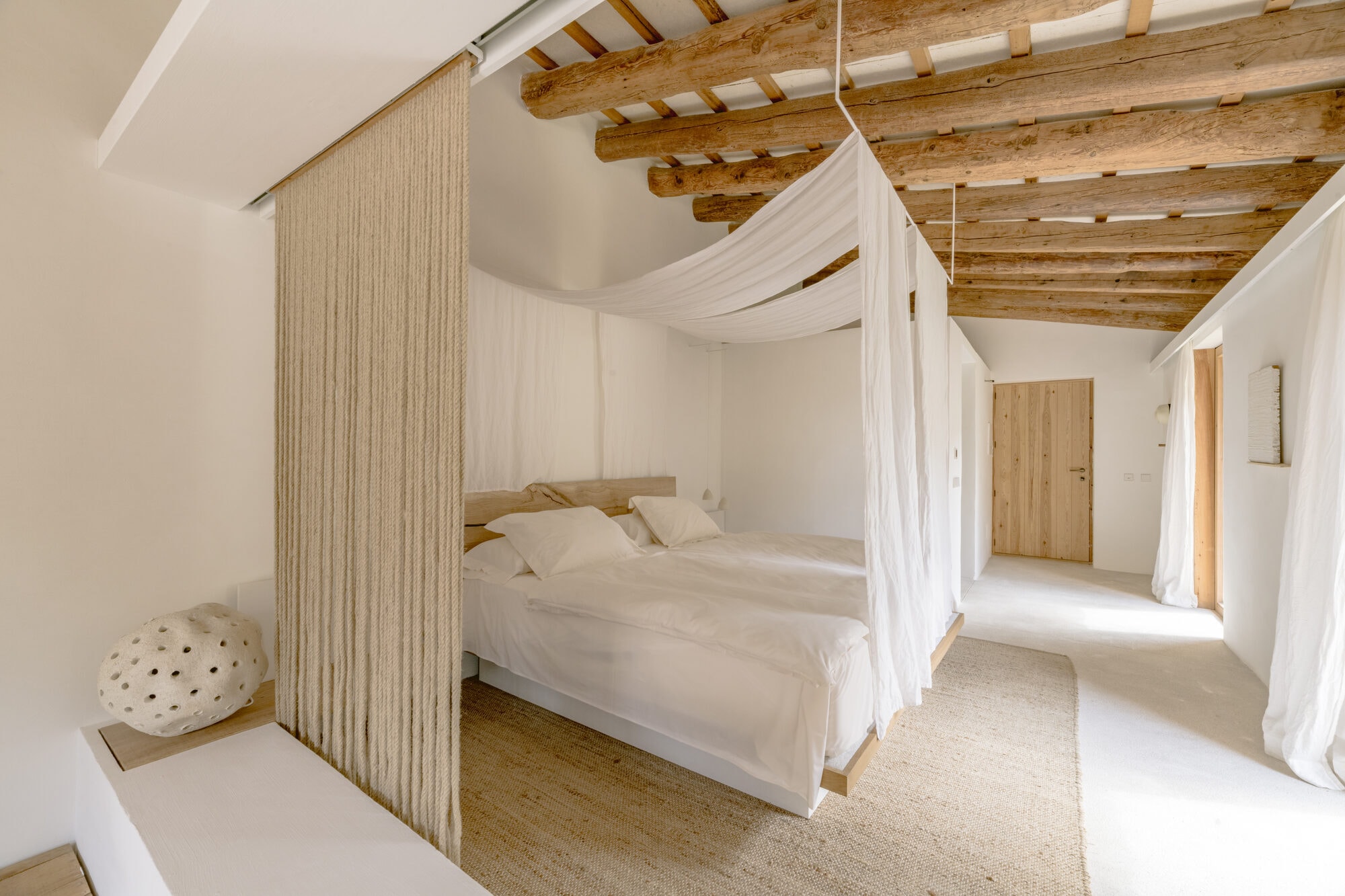
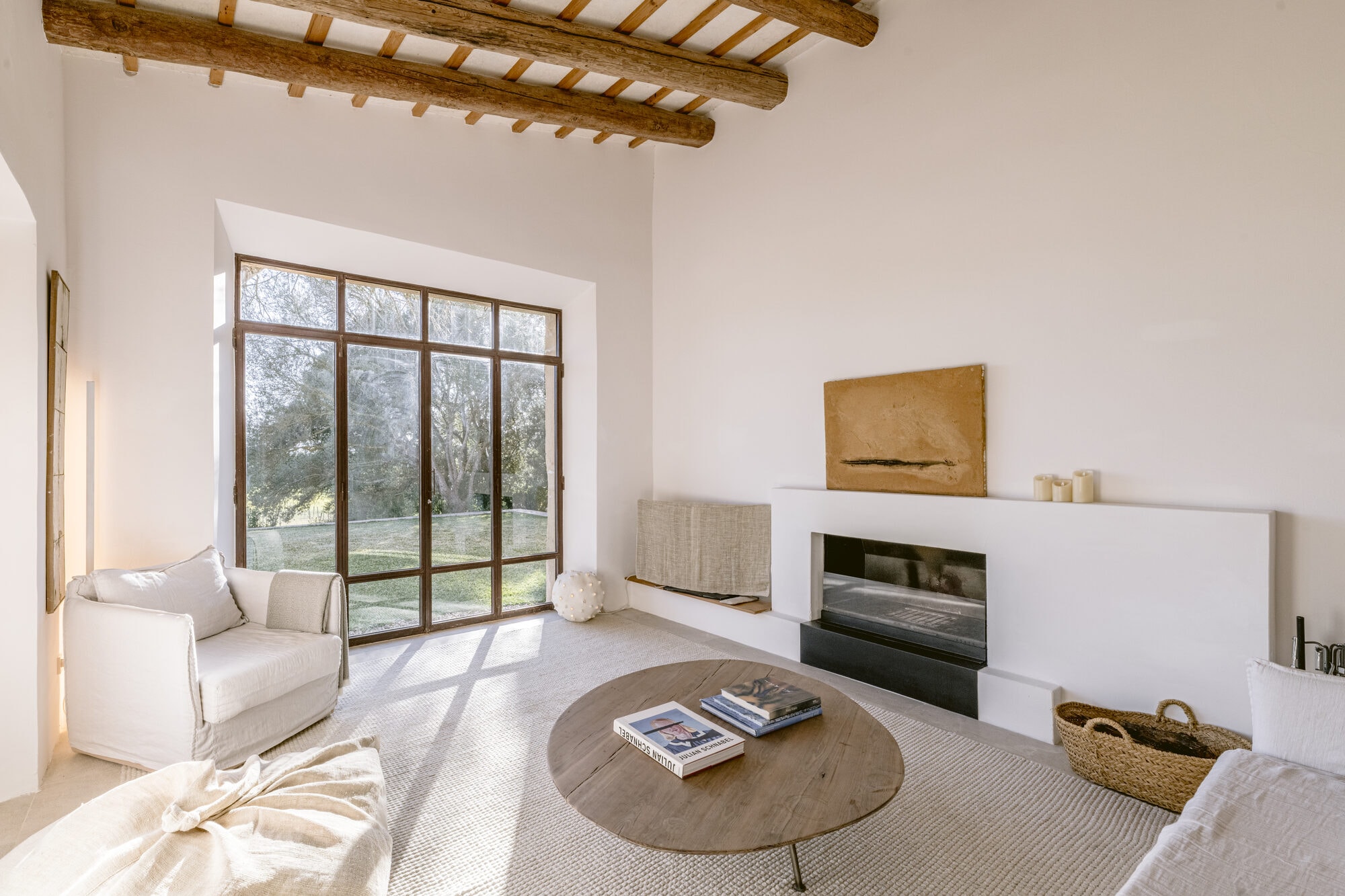
The owners call it “a sanctuary designed for unlearning,” and for once the brochure language undersells it. There is no programme pressed into your hand at check-in, no activity board counting down your day. You settle into one of eight suites in Sa Possessió, the restored main house, or one of twenty-one Casitas — 115 square metres of pale stone, linen and light, some with their own dipping pool. Then the estate does the rest.
An estate, not a hotel
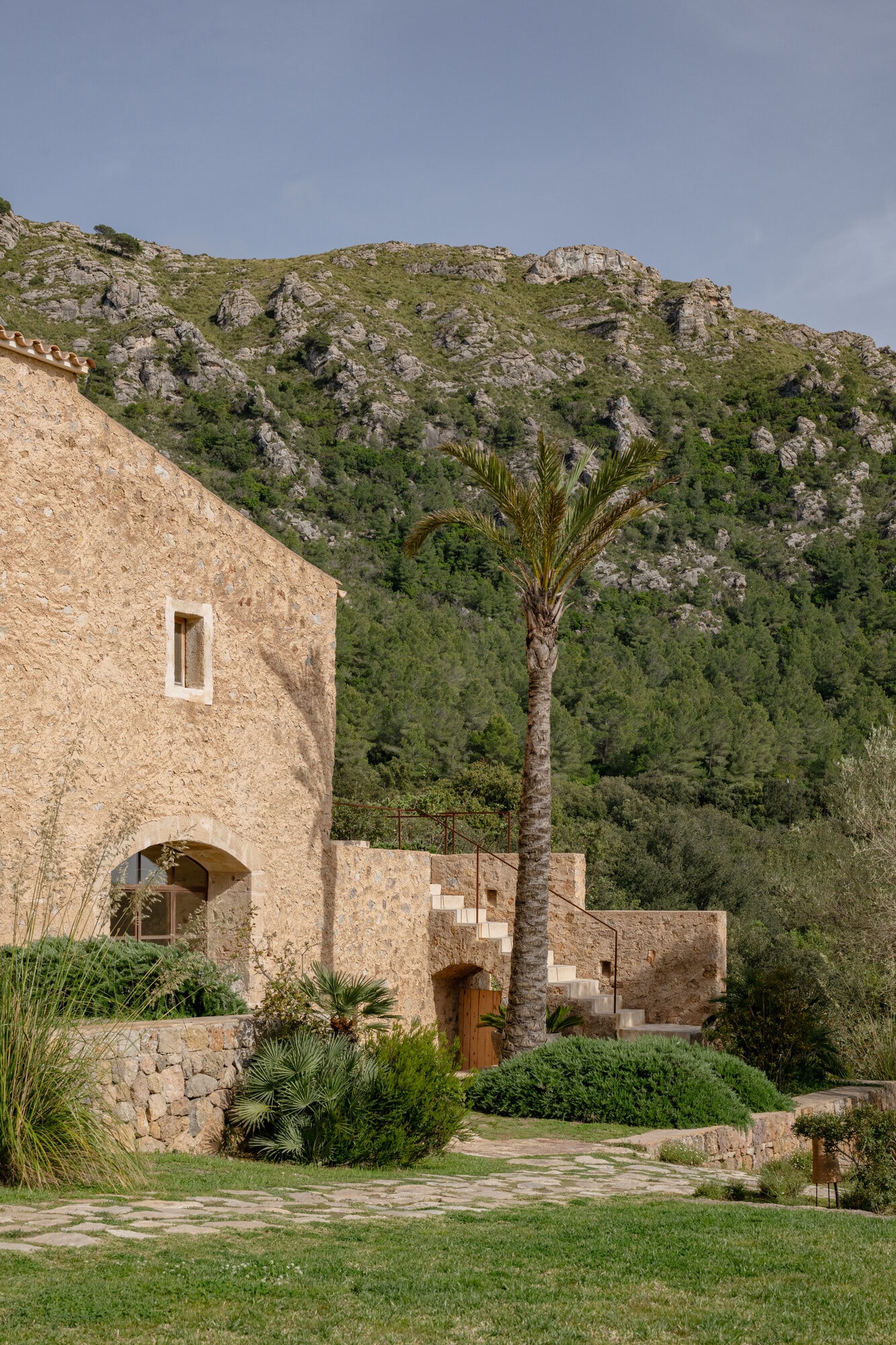
Es Racó is the life's work of two locals, architect Toni Esteva and builder Jaume Danús, who spent years restoring the weather-worn manor and its forgotten fields before opening in 2020. Their story is really the island's story: for generations, Mallorca's fincas belonged to farming families; when tourism arrived, the beaches — once the worthless inheritance of younger sons — became gold, and the farms fell silent.
Es Racó reverses that trade. “Mallorca is not only sun and beaches,” the founders say, “but culture, history, nature, gastronomy — and so much more. We want to offer a worthwhile inheritance to those who come after us.”
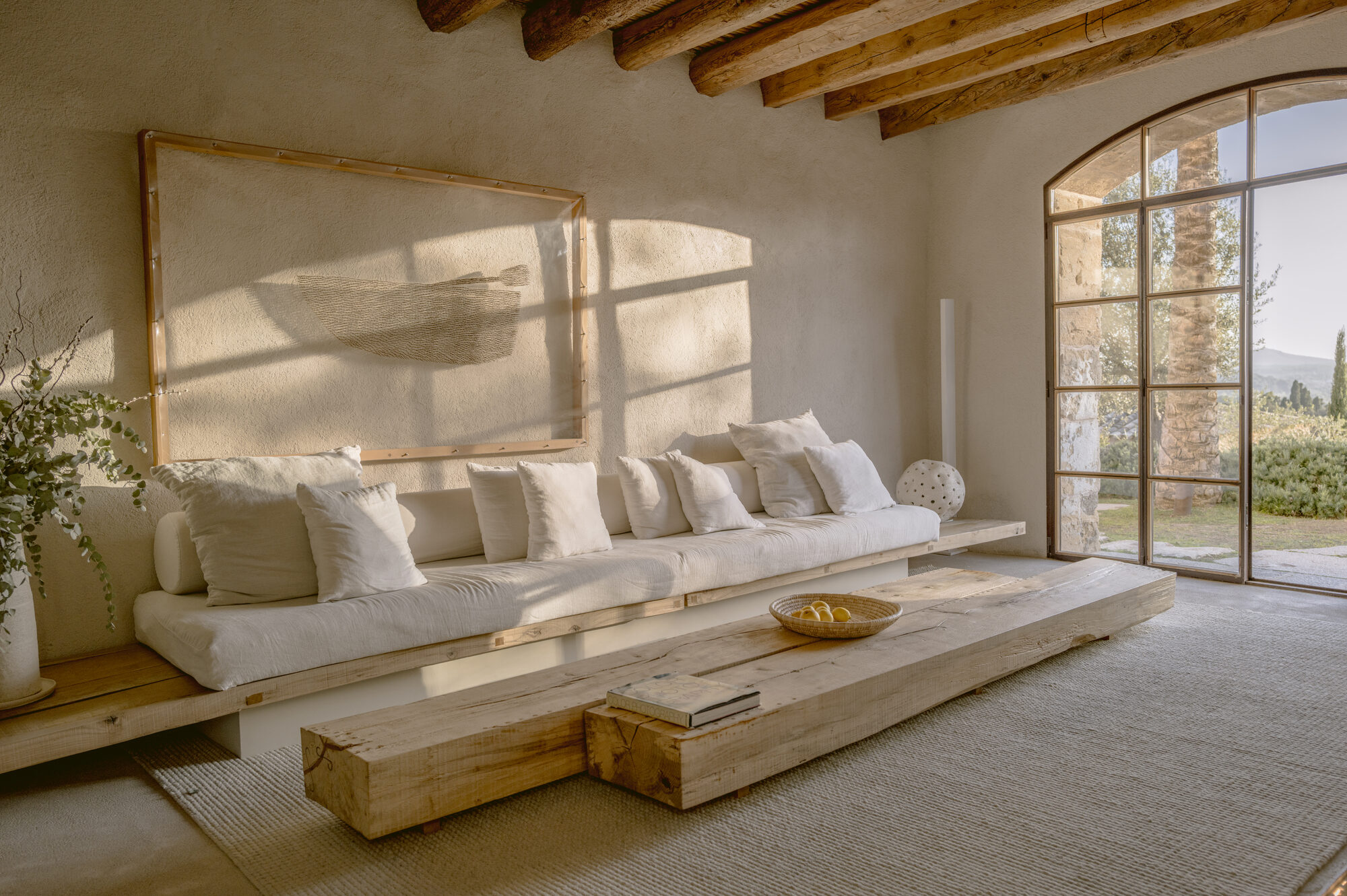
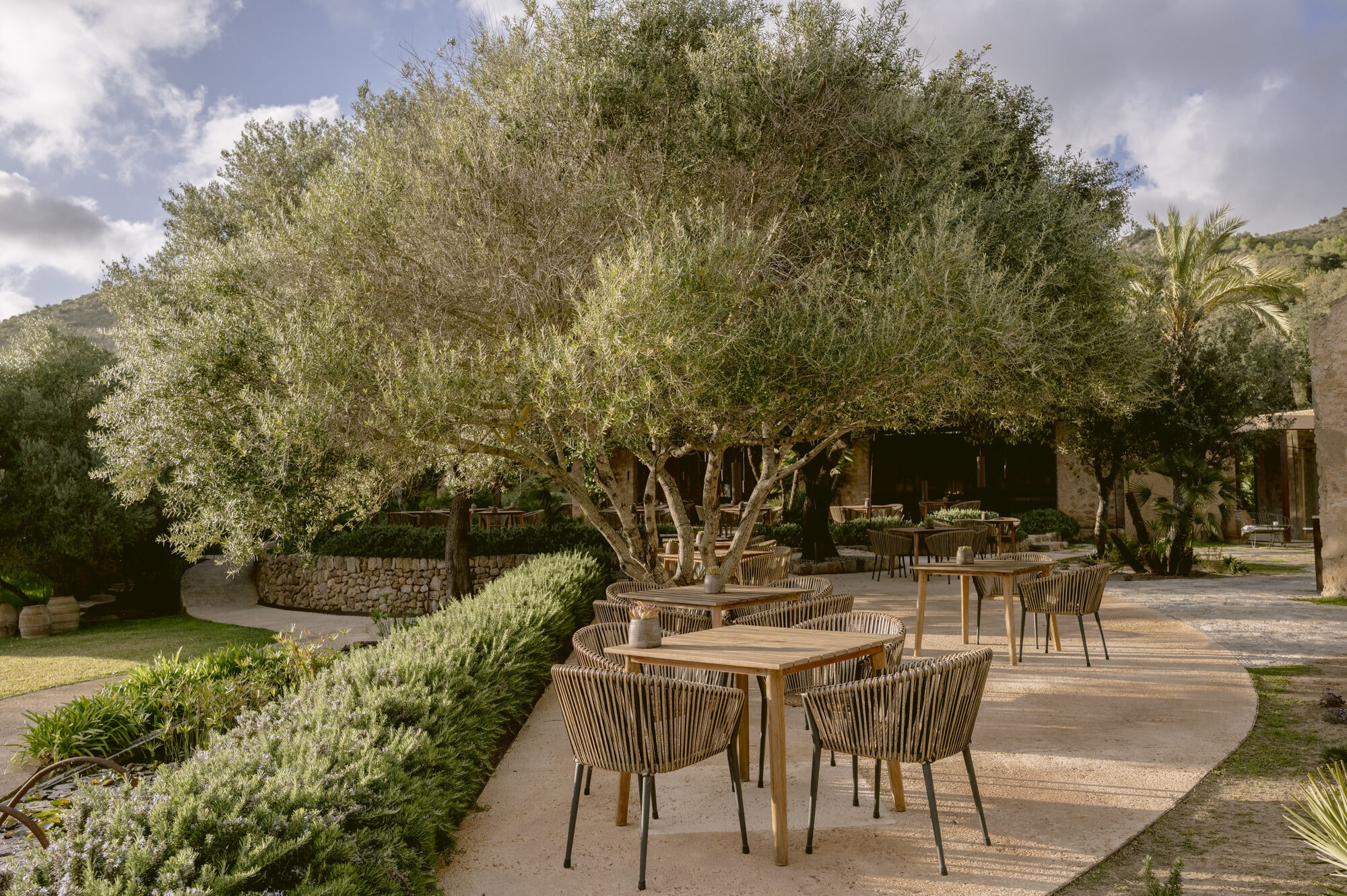
That philosophy is built into the fabric of the place. Floors are clay-filtered cement, made to be felt under bare feet. The glassware is hand-blown at Lafiore on the island; the wood is locally salvaged; the water is filtered and returned to the land. Esteva's personal art collection hangs throughout the house — a Miró here, a sculpture by Jaume Roig there, a floating bamboo piece by Laurent Martin “Lo” above it all. Even the name of the restaurant, Beni Axir, remembers the Berber settlement whose restored cisterns still catch rain on the property.
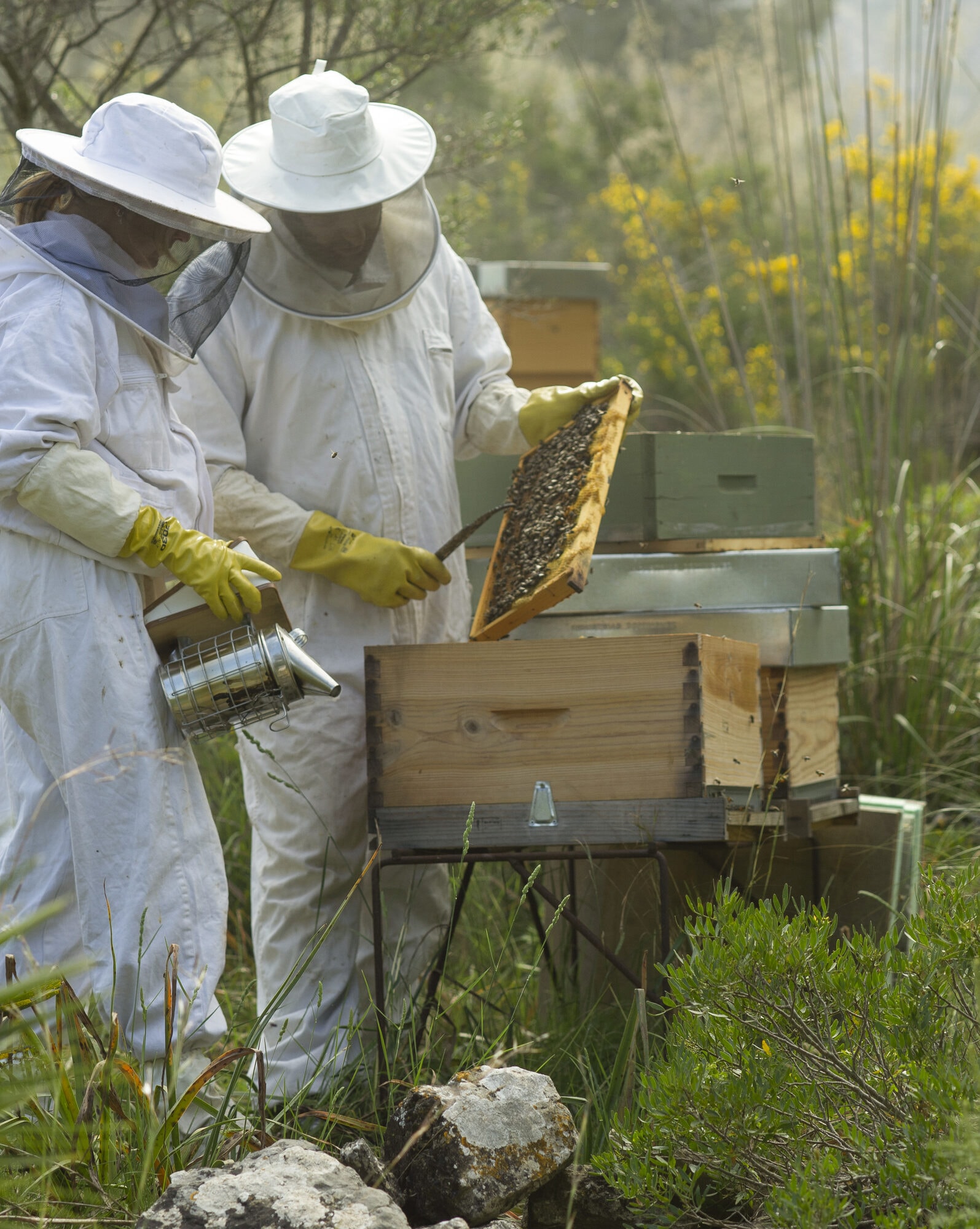
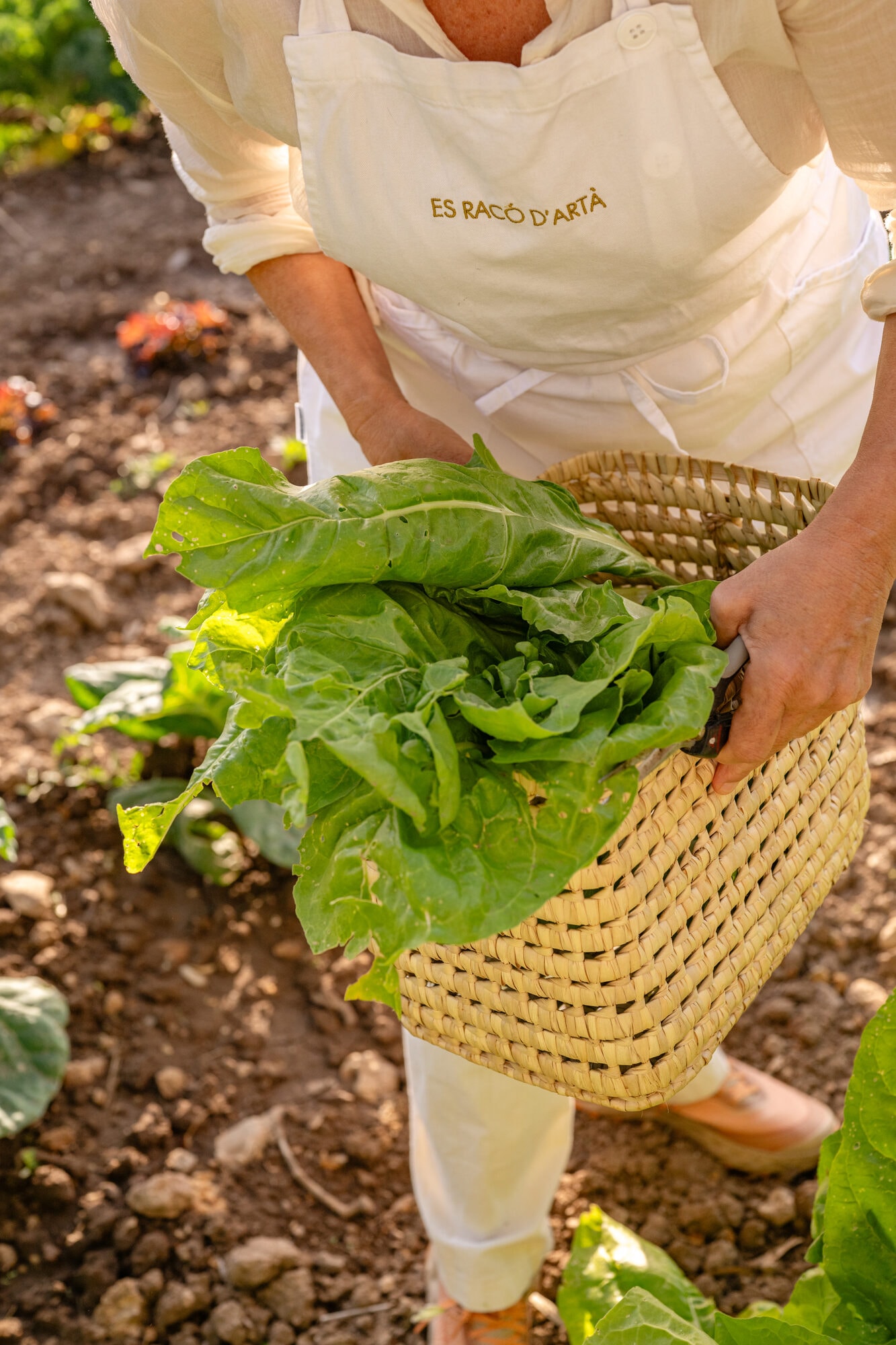
And the estate farms in earnest: fourteen hectares of organic vineyard planted with native Giró Ros and Mantonegro (a bodega is in the works for late 2026), some 1,200 olive trees pressed into the house oil, 200 varieties of fruit tree, beehives tended by local apiarist Pau Illent, and a 2,000-square-metre kitchen garden. Ancient xeixa wheat — a grain the island nearly lost — grows in the surrounding fields and comes back as rustic loaves from Forn Can Leu, a third-generation bakery in Artà.
A day without a plan
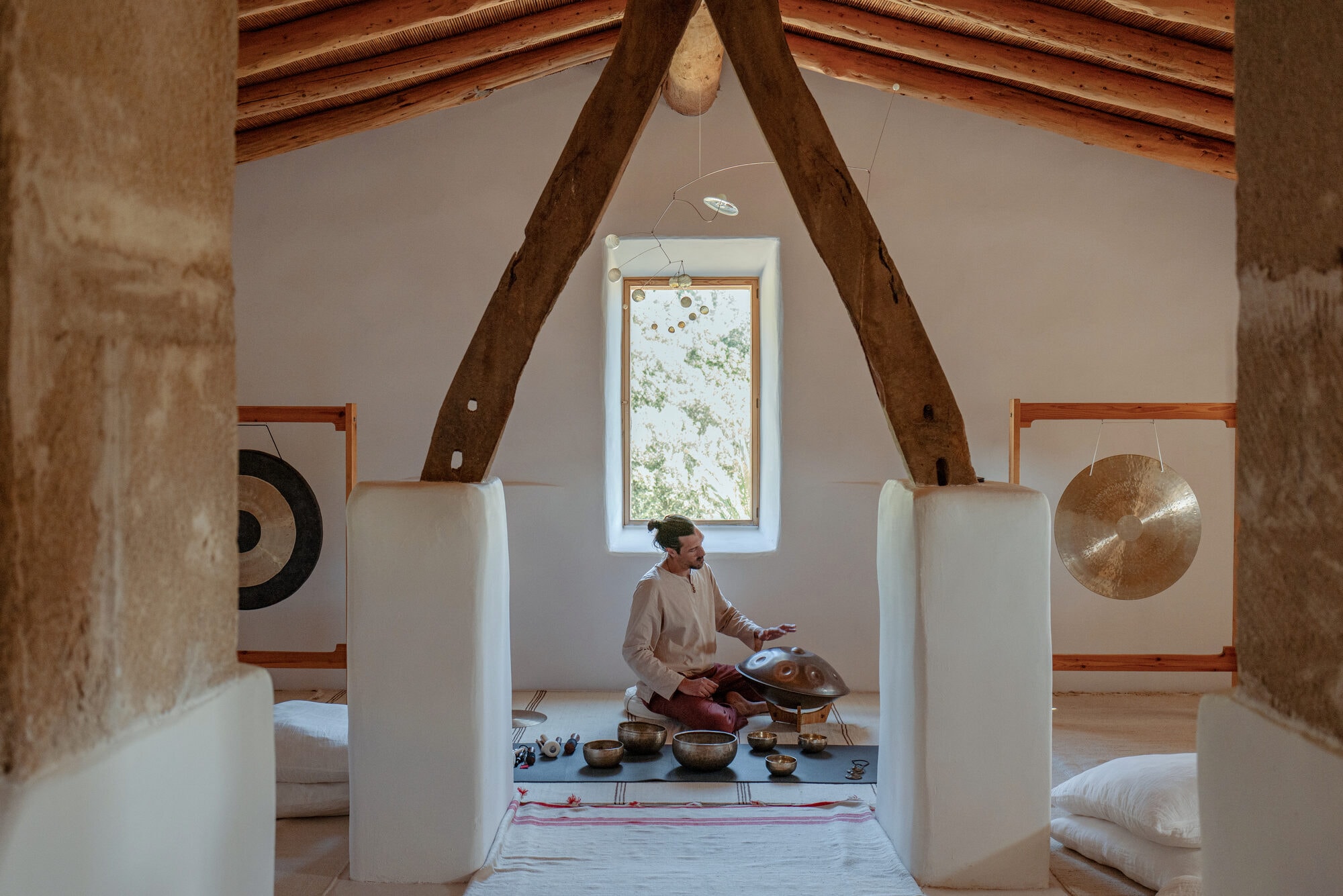
Mornings begin, for those who want them to, with guided meditation and yoga. There are silent walks and forest workshops, mountain-bike routes through the hills, palm-weaving with local artisans, breathwork and sound therapy. None of it is mandatory. The estate's quiet genius is that doing nothing here never feels like missing out.
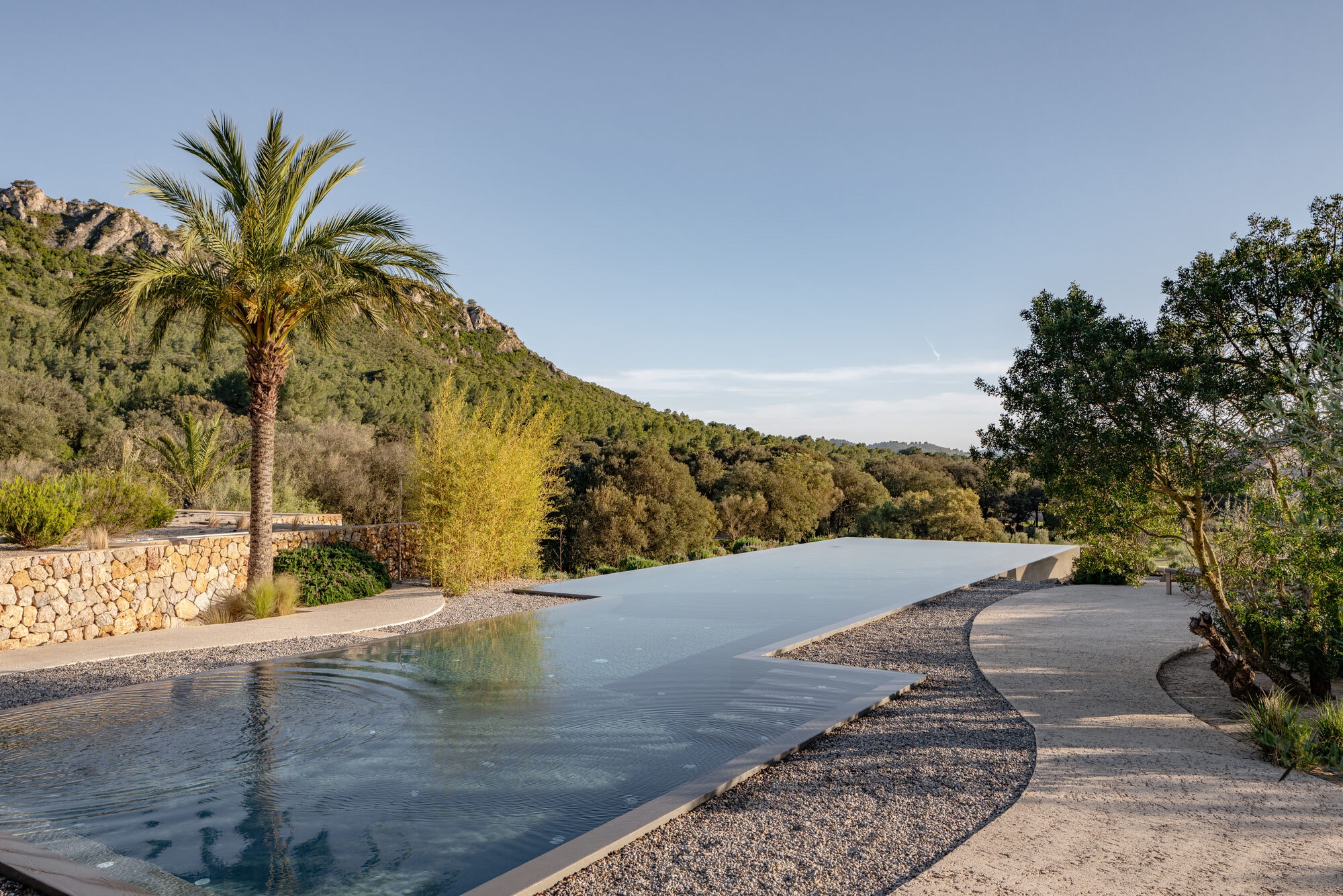
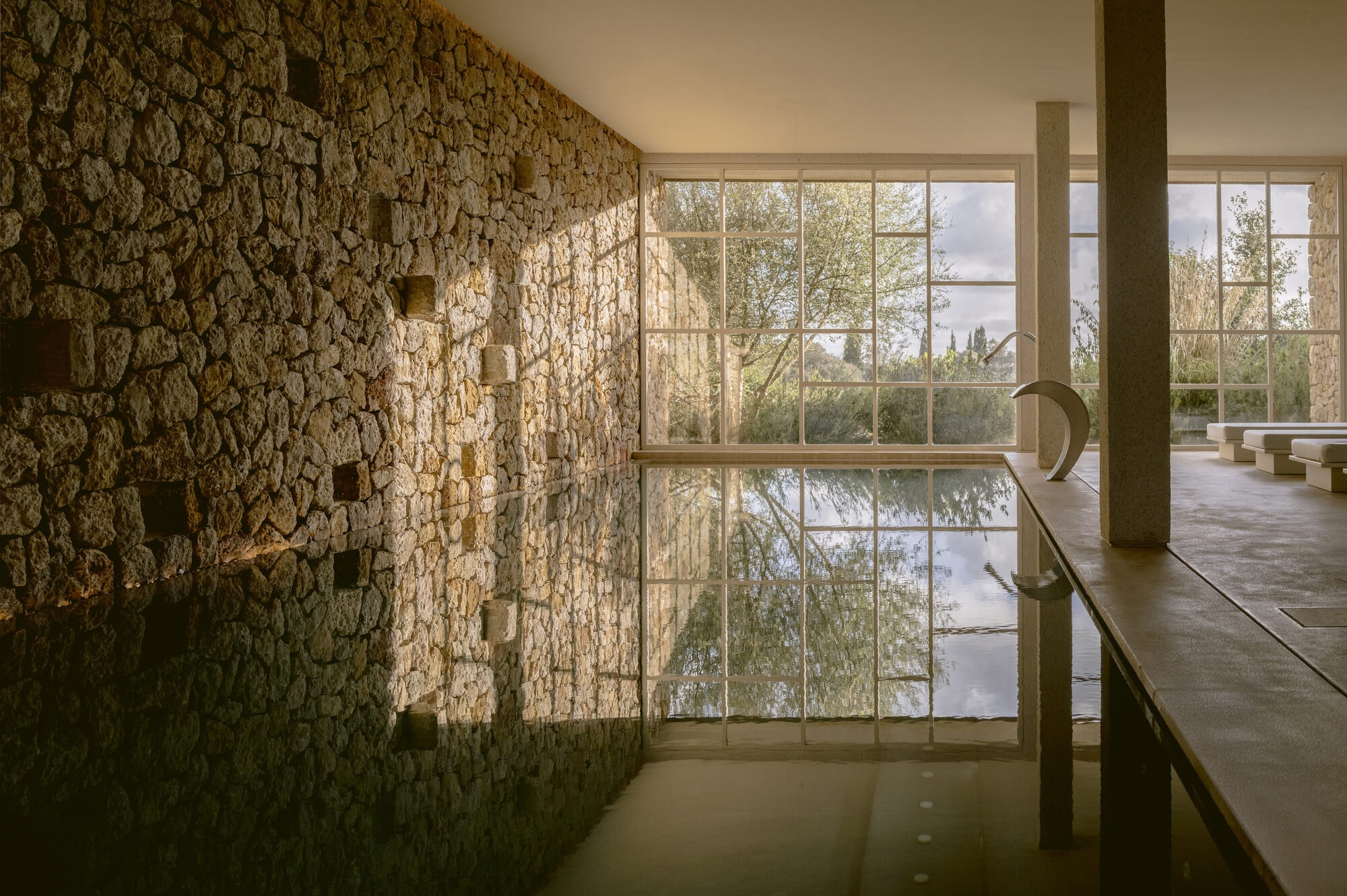
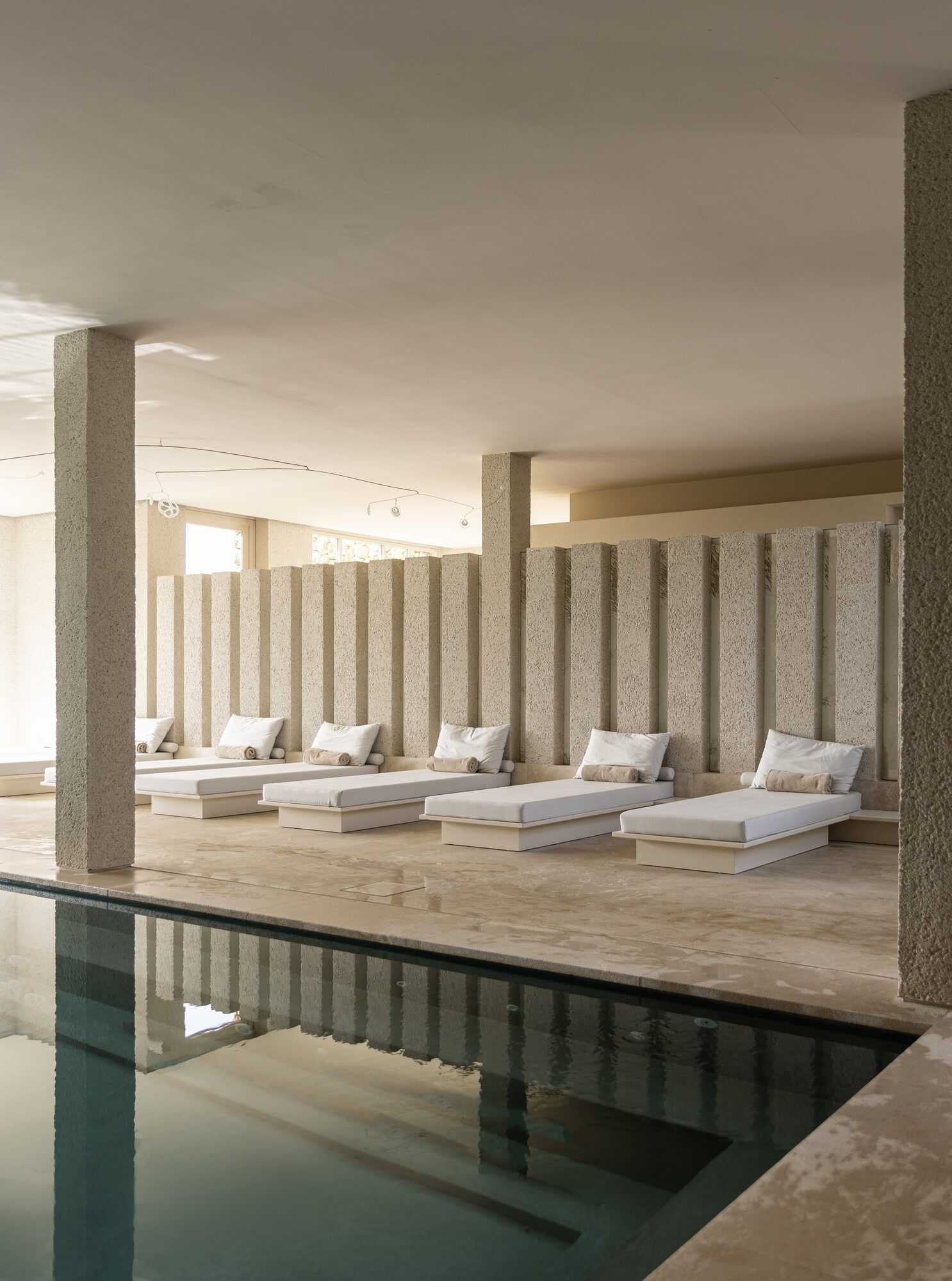
At the centre sits the Sanum Per Aquam Spa — medically licensed, which is rarer than it sounds. A ten-metre indoor saltwater pool, a twenty-five-metre outdoor infinity pool, sauna, steam and contrast baths, five treatment rooms. The signature is Watsu: Zen Shiatsu performed while you float in water heated to 34–36 degrees, your spine decompressing, your nervous system quietly filing its resignation.
Guests looking for more than relaxation can go deeper — the integrative medicine programme, led by Felip Ramis, covers everything from detox protocols to acupuncture, while nutritionist Gemma Bes, who heads the nutrition department at the Rafa Nadal Academy, consults one-on-one. “Here, nutrition isn't about counting calories,” she says. “It's about listening to your body.”
From the soil to the table
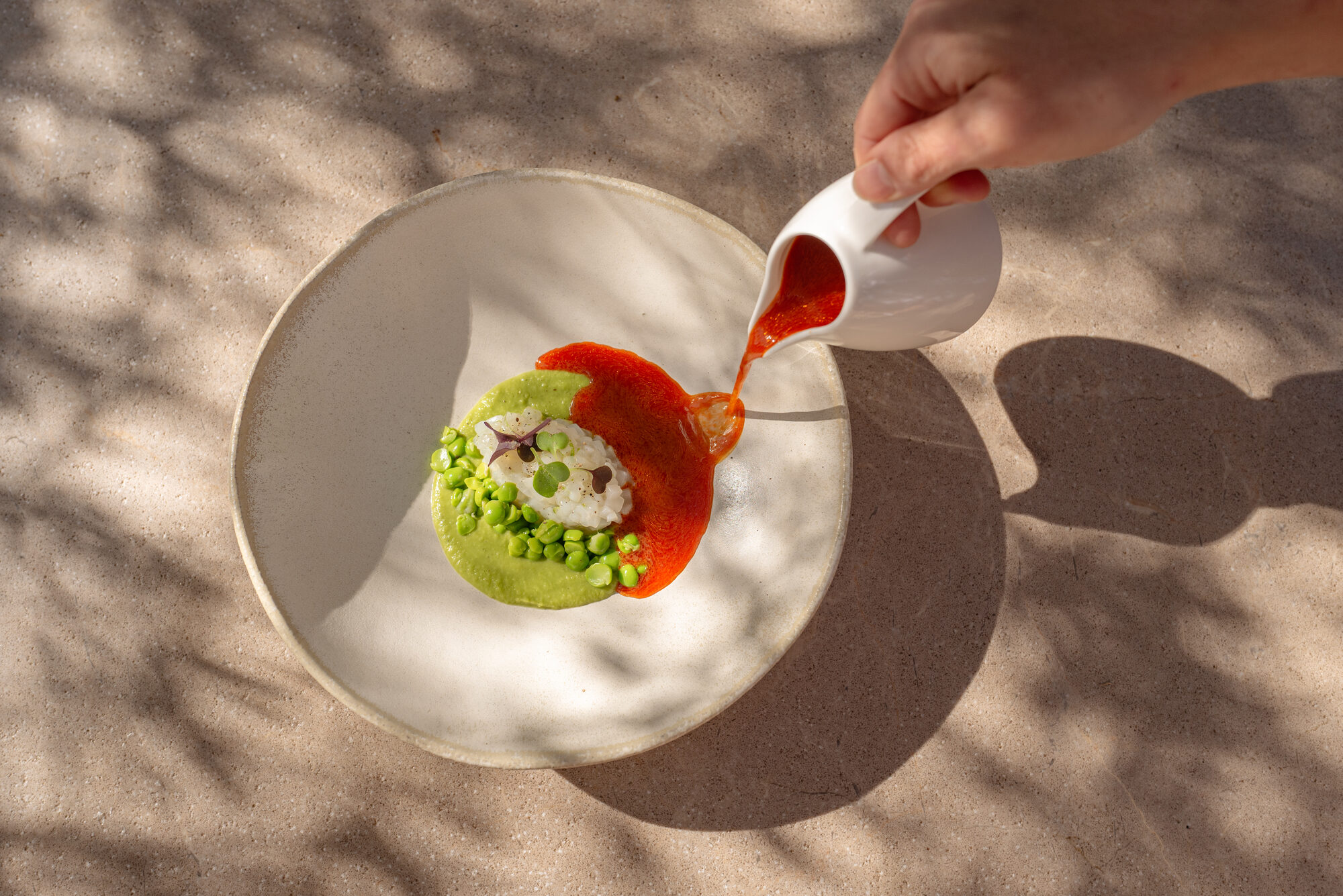
The kitchen belongs to María Solivellas, one of Mallorca's most respected chefs and a pioneer of the island's ingredient-first revival. Her menu at Beni Axir is written each morning by the garden, the forest and the weather. “In a model like this, the kitchen doesn't dictate — it follows,” she says.
What follows might be xeixa flatbread with garden vegetables, figs and the estate's own oil; pomegranate salad with fennel and pickled sea fennel; rabbit with dried apricots and native onion; wild-herb ice cream from botanicals foraged in the estate's forest. Breakfast honey comes from the hives you passed on yesterday's walk. “The goal is for people to truly feel where they are,” Solivellas says. “No compromises on seasonality, origin, or identity.”
Who it's for
Es Racó d'Artà suits travellers who have already done the other Mallorca — or never wanted it. Couples and solo travellers come for a reset; small retreat groups book the houses, Sa Meva Casa and Sa Finqueta, for something longer. It is not a party hotel, and children are not its natural audience. Come in May or June, when the herb garden is loudest, or late September, when the sea is warm and the island exhales.
Getting there: around 70 minutes from Palma airport; the last stretch winds up the Cala Mitjana road above Artà. Stay: suites in Sa Possessió for the main-house feel; Casitas for privacy and dipping pools. Don't miss: a Watsu session, the sunrise silent walk, and the drive to the wild beaches of the Llevant coast.